Turkish, Georgian and Azerbaijani Food Culture: Famous Dishes and Restaurants
Food is one of the best ways to understand a country. Across Turkey, Georgia and Azerbaijan, family recipes, local markets and shared meals reveal stories that sightseeing alone cannot tell. Although these countries share some ingredients, each has its own cooking traditions. Here is what to eat and where to start.
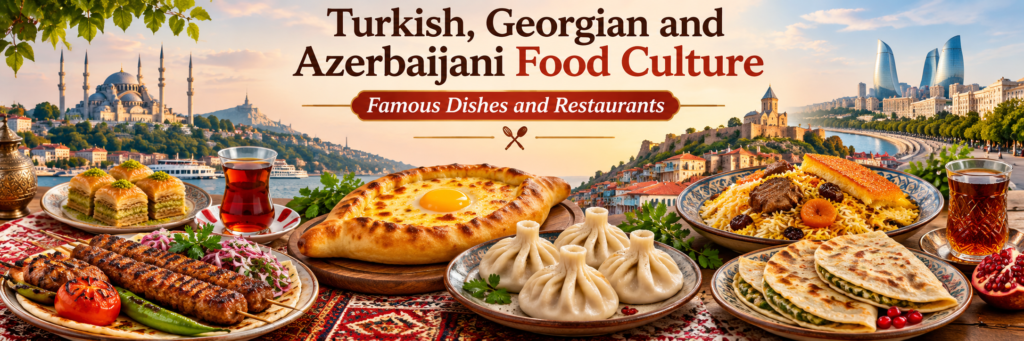
Turkish Food Culture: From Kebabs to Baklava
Turkish cuisine offers much more than grilled meat. Breakfast often includes cheese, olives, tomatoes, bread and tea. Menemen, a dish made with eggs, tomatoes and peppers, is a popular choice. For lunch, try döner kebab or pide, an oven-baked flatbread with toppings.
Another favourite is mant?: small dumplings usually served with garlic yogurt and a butter sauce. Finish your meal with pistachio or walnut baklava, a sweet pastry made from thin layers of dough.
Where to eat in Istanbul: Çiya Sofras? in Kad?köy serves regional Anatolian dishes that visitors may not find on every tourist menu. For dessert, visit Karaköy Güllüo?lu, known for its baklava.
Before your trip, check whether your passport is eligible and review the Turkey eVisa online application process.
Georgian Food Culture: Cheese Bread and Family Feasts
Georgian meals are generous, colourful and often served for sharing. Khachapuri is the dish many visitors try first. This cheese-filled bread comes in several forms, including Adjarian khachapuri, shaped like a boat and topped with egg and butter.
Khinkali are juicy dumplings filled with seasoned meat, mushrooms or cheese. Hold each dumpling by its folded top and take a small bite before drinking the broth. For a meat-free dish, try lobio, a bean stew, or pkhali, vegetables mixed with walnuts and herbs.
Where to eat in Tbilisi: Barbarestan prepares dishes inspired by a nineteenth-century Georgian cookbook. Shavi Lomi offers traditional flavours with modern touches in a relaxed setting.
Georgia has different entry rules depending on nationality. Travellers preparing documents can check the Georgia eVisa document requirements before departure.
Azerbaijani Food Culture: Saffron Rice and Traditional Tea
Azerbaijani cooking features fragrant rice, fresh herbs, grilled meat and slow-cooked dishes. Plov is a favourite, with saffron-scented rice often served alongside meat, dried fruit or chestnuts. Dolma consists of stuffed grape leaves or vegetables, while qutab is a thin flatbread filled with greens, cheese or meat.
For something hearty, try piti, a lamb-and-chickpea stew traditionally cooked in a clay pot. After eating, enjoy black tea served in small, pear-shaped glasses, often accompanied by sweets.
Where to eat in Baku: Firuze Restaurant near Fountain Square serves Azerbaijani dishes in a traditional setting. Shirvanshah Museum Restaurant combines local food with historical-style interiors.
Visitors planning a holiday can review the Azerbaijan tourist eVisa information while arranging their journey.
Tips for Exploring Local Food
Visit markets as well as restaurants, order a few dishes to share and ask what is seasonal. Tell servers about allergies or dietary restrictions, since nuts, dairy and meat appear in many traditional recipes. Restaurant opening times can change, so check before visiting.
Planning Your Food-Focused Trip
An independent eVisa assistance service can make travel preparation easier by helping with document checks, online forms and application questions. Some services also offer mobile-friendly applications and customer support. Before paying, confirm the service fee, processing estimates, data protection practices and any refund conditions. You can also apply through the official government channel when eligible; only the relevant authorities decide whether to approve an application.
Whether you are tasting baklava in Istanbul, khachapuri in Tbilisi or plov in Baku, leave room in your itinerary for a long, memorable meal.
Comments