Traditional Russian, Kazakh and Mongolian Cuisine: Authentic Foods Every Tourist Should Try
Food is one of the best ways to discover a country's culture. Russia, Kazakhstan and Mongolia offer traditional dishes shaped by their history, climate and local ingredients. From hot Russian soups to Kazakh meat dishes and Mongolian dumplings, each country has something special to offer.
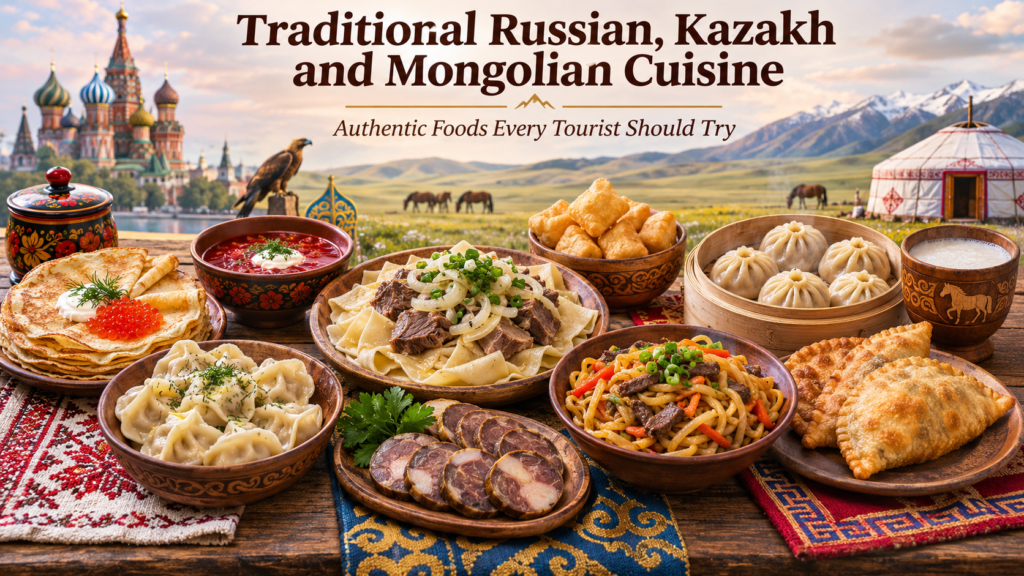
If you are planning a trip across these destinations, here are some authentic foods worth trying.
Traditional Russian Foods Every Tourist Should Taste
Russian cuisine is known for warm, filling meals, especially during cold winters. Potatoes, cabbage, mushrooms, meat and sour cream are common ingredients.
1. Pelmeni – Russian Meat Dumplings
Pelmeni are small dumplings filled with minced meat, usually beef, pork or a mixture of both. They are boiled and served with butter, sour cream or broth.
These dumplings are popular in Russian homes and restaurants. Their soft dough and juicy filling make them a great choice for first-time visitors.
2. Blini – Traditional Russian Pancakes
Blini are thin pancakes served with sweet or savoury toppings. Popular choices include honey, jam, sour cream and smoked salmon.
They are especially popular during Maslenitsa, a traditional festival celebrated before Lent.
3. Shchi – Russian Cabbage Soup
Shchi is a traditional soup prepared with fresh or fermented cabbage, vegetables and sometimes meat.
It is commonly served with sour cream and rye bread, making it a comforting meal during winter.
Before planning your food adventures, check the Russia tourist visa information to understand travel document requirements.
Traditional Kazakh Cuisine: Famous Foods of Kazakhstan
Kazakh food reflects the country's nomadic traditions. Meat, dairy products and homemade dough are important parts of local meals.
4. Beshbarmak – Kazakhstan's National Dish
Beshbarmak is one of Kazakhstan's most famous traditional dishes. It combines boiled meat, usually lamb, beef or horse meat, with wide noodles and onion broth.
The name means "five fingers," referring to the traditional practice of eating it by hand.
5. Baursak – Golden Fried Bread
Baursak consists of small pieces of dough fried until golden. They are soft inside and slightly crispy outside.
Locals often serve baursak with tea, honey or other dishes during family gatherings and celebrations.
6. Kazy – Traditional Horse Meat Sausage
Kazy is a traditional Kazakh sausage made from seasoned horse meat, particularly meat from the ribs.
It is usually sliced and served during special occasions, celebrations and family meals.
Travelers preparing for Kazakhstan can explore how to apply for a Kazakhstan eVisa and check whether their nationality qualifies.
Traditional Mongolian Foods You Should Not Miss
Mongolian cuisine focuses on meat, dairy products and flour-based dishes. Many recipes developed around the country's nomadic lifestyle.
7. Buuz – Mongolian Steamed Dumplings
Buuz are steamed dumplings filled with minced mutton or beef and onions.
They are particularly popular during Tsagaan Sar, the Mongolian Lunar New Year, when families prepare large quantities for guests.
8. Khuushuur – Crispy Fried Meat Pastries
Khuushuur are flat, fried pastries filled with seasoned minced meat.
They are widely enjoyed during the Naadam Festival and can also be found in restaurants and roadside eateries.
9. Tsuivan – Mongolian Fried Noodles
Tsuivan is a satisfying dish made with handmade wheat noodles, meat and vegetables such as carrots and cabbage.
It is a common everyday meal, especially for travelers exploring Mongolia's countryside.
10. Airag – Traditional Fermented Milk Drink
Airag is made from fermented mare's milk. It has a slightly sour taste and naturally contains a small amount of alcohol.
Visitors can try this traditional drink during summer, particularly when visiting rural communities.
Before traveling, review the Mongolia eVisa eligible countries to understand whether you can apply online.
Helpful Food Tips for Tourists
Visit local markets, family-run restaurants and traditional eateries to experience regional cooking. Ask about ingredients before ordering, particularly if you avoid certain meats or dairy products.
Traditional meals are often shared, so take the opportunity to learn about local dining customs.
Final Thoughts
Exploring Russian, Kazakh and Mongolian cuisine adds a memorable experience to any holiday. Whether you enjoy Russian pelmeni, Kazakhstan's beshbarmak or Mongolian buuz, these authentic foods offer a delicious introduction to local traditions.
Trying regional dishes is not just about eating. It is also a wonderful way to understand the people, history and culture of each destination.
Comments