Travelling through Africa is not just about wildlife safaris, national parks and beautiful landscapes. It is also about discovering local flavours, meeting communities and experiencing traditions passed down through generations. Zambia, Malawi and Tanzania offer unique cultural experiences that help visitors understand everyday life in East and Southern Africa.
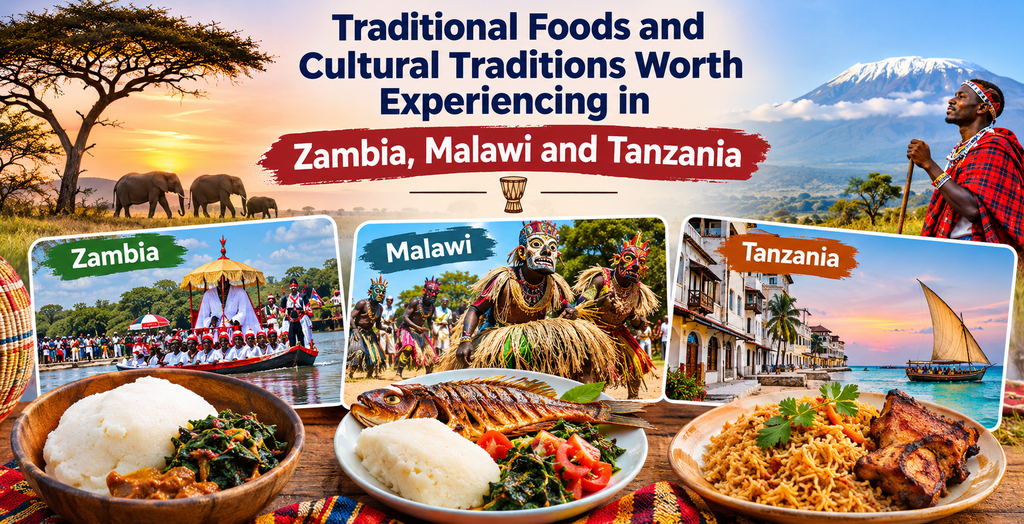
From traditional maize dishes to colourful festivals, each country has something special to offer. Here are some of the best local foods and cultural traditions to explore during your journey.
Zambia: Traditional Foods and Colourful Festivals
Try Nshima, Zambia's Most Popular Traditional Food
Nshima is a staple food in Zambia, prepared using maize flour and water. It has a thick texture and is commonly served with vegetables, beans, fish or meat.
Another dish worth trying is ifisashi, which combines leafy vegetables with groundnuts. Travellers can enjoy these traditional meals at local restaurants and markets.
Before planning a cultural holiday, international visitors should check Zambia eVisa eligibility requirements to understand whether they need an electronic travel authorisation.
Experience the Kuomboka Ceremony
The Kuomboka ceremony is one of Zambia's most remarkable cultural celebrations. Held by the Lozi people in Western Province, it marks the traditional movement of the Litunga, the Lozi king, from the flooded plains to higher ground.
Visitors can witness decorated boats, traditional drumming and ceremonial clothing. The celebration usually takes place during the flood season, although the exact date varies.
Malawi: Local Cuisine and Community Traditions
Taste Nsima and Fresh Chambo Fish
Malawi is known for its simple, filling meals made from locally available ingredients. Nsima, prepared from maize flour, is commonly served with vegetables, beans or fish.
Chambo, a fish associated with Lake Malawi, is another popular local dish. It is often grilled or fried and served with nsima and vegetables.
Food is an important part of family gatherings, where sharing meals helps strengthen relationships and community bonds.
Travellers interested in exploring local villages and traditional food markets can apply for a Malawi tourist eVisa if their nationality requires one.
Discover the Gule Wamkulu Dance Tradition
Gule Wamkulu is a traditional masked dance associated with the Chewa communities of Malawi and neighbouring countries.
Performers wear elaborate masks and costumes representing different characters. These performances are traditionally connected with ceremonies and important community events.
Visitors should respect local customs and request permission before photographing cultural performances.
Tanzania: Coastal Flavours and Traditional Music
Enjoy Ugali, Pilau and Nyama Choma
Tanzania offers a wonderful mixture of African, Arab and Indian culinary influences, particularly along its Indian Ocean coast.
Ugali is a common maize-based staple served with vegetables, meat or fish. Nyama choma, meaning roasted meat, is especially popular at social gatherings.
In Zanzibar, travellers can enjoy aromatic pilau rice prepared with spices such as cloves, cinnamon and cardamom. Local food markets provide opportunities to experience these flavours.
Before departure, eligible travellers should review the required documents for Tanzania eVisa to prepare their applications correctly.
Explore Traditional Music and Zanzibar Culture
Music and dance play important roles in Tanzanian cultural life. Traditional ngoma performances feature drumming, singing and dancing, with styles varying across communities.
Zanzibar is also famous for taarab music, which blends coastal East African traditions with influences from the Indian Ocean region.
Visitors can explore Stone Town, experience local markets and discover traditional crafts while learning about the island's cultural history.
Tips for Experiencing Local African Culture
When visiting Zambia, Malawi or Tanzania, choose locally owned restaurants, attend community events respectfully and ask about cultural etiquette.
Learning a few local greetings can also make interactions more meaningful. Always seek permission before taking photographs of people or religious ceremonies.
Conclusion
Zambia, Malawi and Tanzania offer memorable experiences beyond their natural attractions. Traditional meals, music, dance and community celebrations reveal the rich cultural identities of these countries.
Whether you are tasting nshima in Zambia, enjoying chambo in Malawi or exploring Zanzibar's food markets, these experiences can make your African journey more meaningful and unforgettable.
Comments