A Culinary Journey Through the Middle East: Traditional Food Experiences in Jordan, Saudi Arabia, and Iraq
When traveling through the Middle East, the best way to connect with the local culture is through the dining table. Food here is more than just a meal; it is a warm expression of hospitality, heritage, and history. If you are planning a trip to this vibrant region, exploring the local cuisine should be at the top of your itinerary.
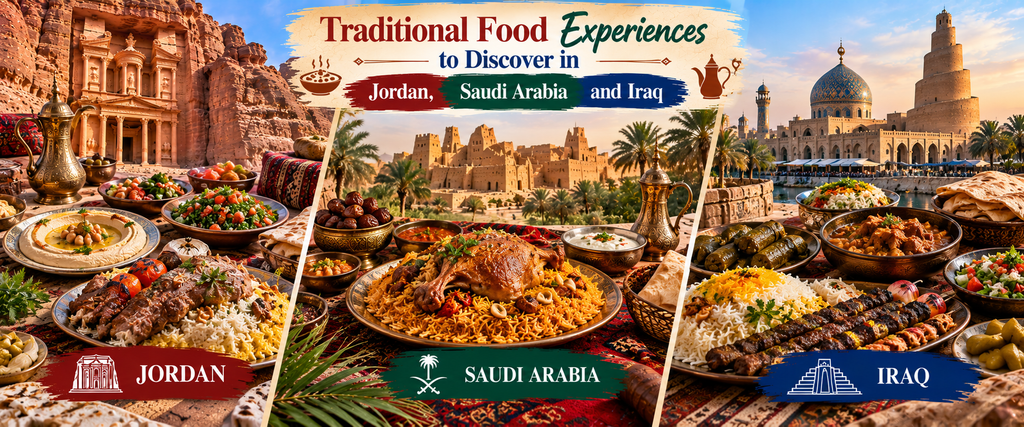
To make your journey smooth and stress-free, we have also included helpful travel tips and visa links at the end of each section. Let us dive into the delicious traditional food experiences waiting for you in Jordan, Saudi Arabia, and Iraq!
1. Jordan: A Feast of Mansaf and Bedouin Hospitality
Jordanian cuisine is famous for its rich flavors, fresh herbs, and communal style of eating. The ultimate culinary symbol of the country is Mansaf, a dish deeply rooted in Bedouin culture.
What is Mansaf?
Mansaf consists of tender lamb cooked in Jameed (fermented, dried yogurt that is reconstituted into a rich, tangy sauce). It is served over a large bed of turmeric-infused rice and thin flatbread (Shrak), then generously topped with toasted pine nuts and almonds. Eating Mansaf is traditionally a communal experience where guests gather around a large platter, traditionally eating with their right hand while keeping the left hand behind their back.
Other Jordanian Delights to Try:
- Zarb: Meat and vegetables slow-cooked in an underground pit oven, resulting in a smoky, melt-in-your-mouth texture.
- Falafel and Hummus: Crispy chickpea fritters paired with creamy, smooth chickpea paste, olive oil, and warm pita bread—a staple breakfast across Amman.
Planning a trip to see Petra and taste authentic Mansaf? You can secure your travel paperwork easily through a reliable Jordan Tourist eVisa service.
2. Saudi Arabia: Savoring Kabsa and Royal Spices
Saudi Arabian food reflects a rich tapestry of trade routes, desert traditions, and regional diversity. As you travel from the coasts of the Red Sea to the central dunes of Najd, the aromatic spices will guide your senses.
Discovering Authentic Kabsa
The national dish of Saudi Arabia is Kabsa. It features long-grain basmati rice cooked with a delicate blend of spices like cardamom, saffron, cloves, black lime, and cinnamon. It is typically prepared with chicken, lamb, or camel meat and garnished with raisins and fried onions. Every bite is packed with warm, aromatic flavors that tell the story of ancient spice traders.
Other Saudi Culinary Highlights:
- Saleeg: A creamy, comforting rice dish cooked in rich meat broth and milk, often compared to a savory risotto and popular in the Hejaz region.
- Jareesh: A traditional comforting dish made from cracked wheat cooked with meat, onions, and spices, topped with caramelized onions and hot ghee.
- Saudi Coffee (Qahwa) with Dates: No Saudi meal or welcome is complete without lightly roasted coffee flavored with cardamom, served alongside sweet, sticky local dates.
Ready to explore the historic sites and rich culinary traditions of the Kingdom? Get started on your journey by applying through a trusted Saudi Arabia Tourist Visa portal.
3. Iraq: Mesopotamia’s Ancient Flavors and Masgouf
Iraqi cuisine draws on thousands of years of Mesopotamian history, blending Persian, Turkish, and Mediterranean influences into hearty, flavorful dishes.
The Legend of Iraqi Masgouf
No trip to Iraq is complete without trying Masgouf, the national dish. This is river fish (typically carp) split open down the back, cleaned, and marinated with olive oil, rock salt, tamarind, and turmeric. The fish is traditionally slow-roasted vertically around an open wood fire made from apricot tree logs. The result is a smoky, crispy skin with tender, flaky meat that is simply unforgettable.
Other Iraqi Favorites to Enjoy:
- Quzi: Slow-roasted lamb stuffed with spiced rice, almonds, raisins, and aromatic vegetables, often served at weddings and grand family gatherings.
- Dolma: Grape leaves, onions, zucchini, and eggplant stuffed with a savory mixture of minced meat, rice, and herbs, simmered in a tangy pomegranate and tomato broth.
- Iraqi Tea (Chai): Served throughout the day in small, hourglass-shaped glasses, heavily sugared and infused with cardamom.
Curious about the ancient ruins, vibrant culture, and incredible flavors of Iraq? Make sure your documents are in order by checking the Iraq eVisa Required Documents before you fly.
Why Choose Our Visa Services?
Planning an international adventure should be exciting, not stressful. When you prepare for your trip to Jordan, Saudi Arabia, or Iraq, our travel partners are here to support you every step of the way:
- Reliable Travel Visa Services: Our global approach has assisted numerous travelers in obtaining their visa smoothly.
- Round-the-Clock Assistance: Reach out to us 24/7, and our experts will respond within 72 hours.
- Experienced Visa Consultants: Receive expert guidance to ensure the acceptance of your application.
- Efficient Visa Application Process: Apply for your visa in minutes with our simplified, user-friendly forms.
Pack your appetite and get ready for the journey of a lifetime!
Comments