If you are a nature lover or a wildlife photographer looking to escape the crowded beaches, the Philippines has a well-kept secret waiting for you. Beyond the famous white sands and turquoise waters lie lush, sprawling mangrove forests. These vital coastal ecosystems are buzzing with life, offering incredible opportunities to capture stunning macro shots, unique bird species, and breathtaking landscape photography.
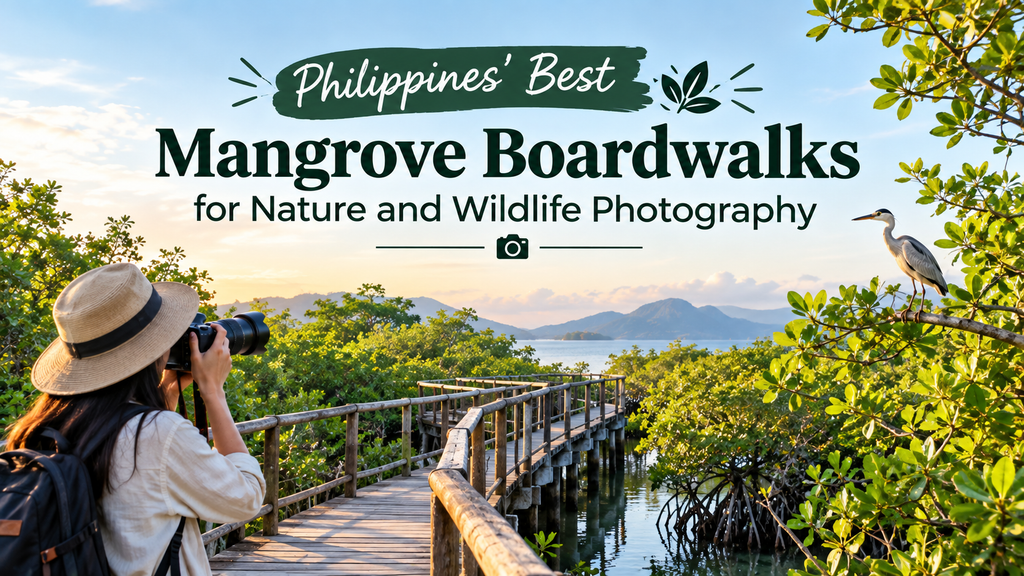
Walking above the tranquil water on wooden pathways allows you to immerse yourself completely in nature without disturbing the delicate habitat. Whether you are aiming for a professional portfolio or simply want to capture unforgettable memories for your travel blog, here are the top mangrove boardwalks in the Philippines that you need to add to your photography bucket list.
1. Subic Watershed and Mangrove Park (Zambales)
Located just a few hours away from Metro Manila, the Subic Watershed and Mangrove Park is an accessible haven for photographers looking for a quick nature escape.
- Why it’s great for photography: The calm, reflective waters create mirror-like surfaces that are perfect for symmetrical landscape shots. The dense canopy provides dramatic interplay between light and shadow during the golden hours.
- Wildlife to watch out for: Various species of migratory birds, monitor lizards, and unique crabs scuttling along the muddy roots.
- Photography Tip: Bring a macro lens. The intricate textures of the mangrove root systems and the tiny marine life living on them offer fantastic close-up opportunities.
2. Bakhawan Eco-Park (Kalibo, Aklan)
Spanning over 220 hectares, Bakhawan Eco-Park is widely regarded as one of the most successful mangrove reforestation projects in the Philippines. It features a solid 1.3-kilometer bamboo boardwalk that snakes through a dense, thriving forest out to the open sea.
- Why it’s great for photography: The sheer scale of the park offers endless depth-of-field compositions. The long boardwalk makes for a fantastic leading-line perspective shot pointing toward the ocean.
- Wildlife to watch out for: Mudskippers, kingfishers, herons, and various shellfish.
- Photography Tip: Visit early in the morning when the local bird activity peaks and the soft morning light filters gently through the green canopy.
3. Olango Island Wildlife Sanctuary (Cebu)
While Olango Island is globally famous as a stopover for migratory birds traversing the East Asian-Australasian Flyway, its surrounding tidal flats and mangrove boardwalks are a paradise for wildlife photographers.
- Why it’s great for photography: It is a premier destination for bird watching and avian photography. You can capture sharp, action-packed shots of migratory birds feeding and resting.
- Wildlife to watch out for: Chinese egrets, Asian dowitchers, plovers, and various other migratory and resident waterbirds.
- Photography Tip: A telephoto lens (at least 300mm or higher) is an absolute must-have here to get crisp close-ups of distant birds without startling them.
Plan Your Photography Adventure to the Philippines Today!
Planning an international photography trip requires careful preparation, especially when getting your travel documents in order. If you are ready to explore these breathtaking natural wonders firsthand, make sure your journey starts smoothly.
Why Choose Us?
- Reliable Travel Visa Services: Our global approach has assisted numerous travelers in obtaining their Visa.
- Round-the-Clock Assistance: Reach out to us 24/7, and our experts will respond within 72 hours.
- Experienced Visa Consultants: Receive expert guidance to ensure the acceptance of your application.
- Efficient Visa Application Process: Apply for your Visa in minutes with our simplified form.
Ready to take the next step? Check out the detailed guide on requirements and start your application today at Visa Philippines Requirements.
4. Loboc River Mangrove and Eco-Tourism Area (Bohol)
Bohol is world-famous for the Chocolate Hills and tarsiers, but its riverine mangrove systems offer an entirely different side of nature photography.
- Why it’s great for photography: The combination of freshwater rivers meeting coastal mangrove forests creates a unique, dramatic landscape. The lush greenery contrasting with the emerald-tinted water is visually striking.
- Wildlife to watch out for: Fireflies (during evening tours), colorful kingfishers, and native river fauna.
- Photography Tip: If you stay until late afternoon, try a long-exposure shot of the river water contrasting against the static, sturdy roots of the mangrove trees.
Essential Tips for Mangrove Photography
- Protect Your Gear: Mangrove areas are humid and coastal environments carry salt in the air. Keep your camera wiped clean and use protective covers if necessary.
- Wear Bug Spray: The shaded, damp environment is home to mosquitoes. Protect yourself so you can focus entirely on framing your shots.
- Respect the Ecosystem: Stay strictly on the boardwalks. Mangroves are fragile protected areas that act as natural storm barriers for local communities.
Pack your camera gear, prep your gear bags, and get ready to discover the vibrant, green wilderness hidden along the coasts of the Philippines!
see this here https://ricewallet.cc/