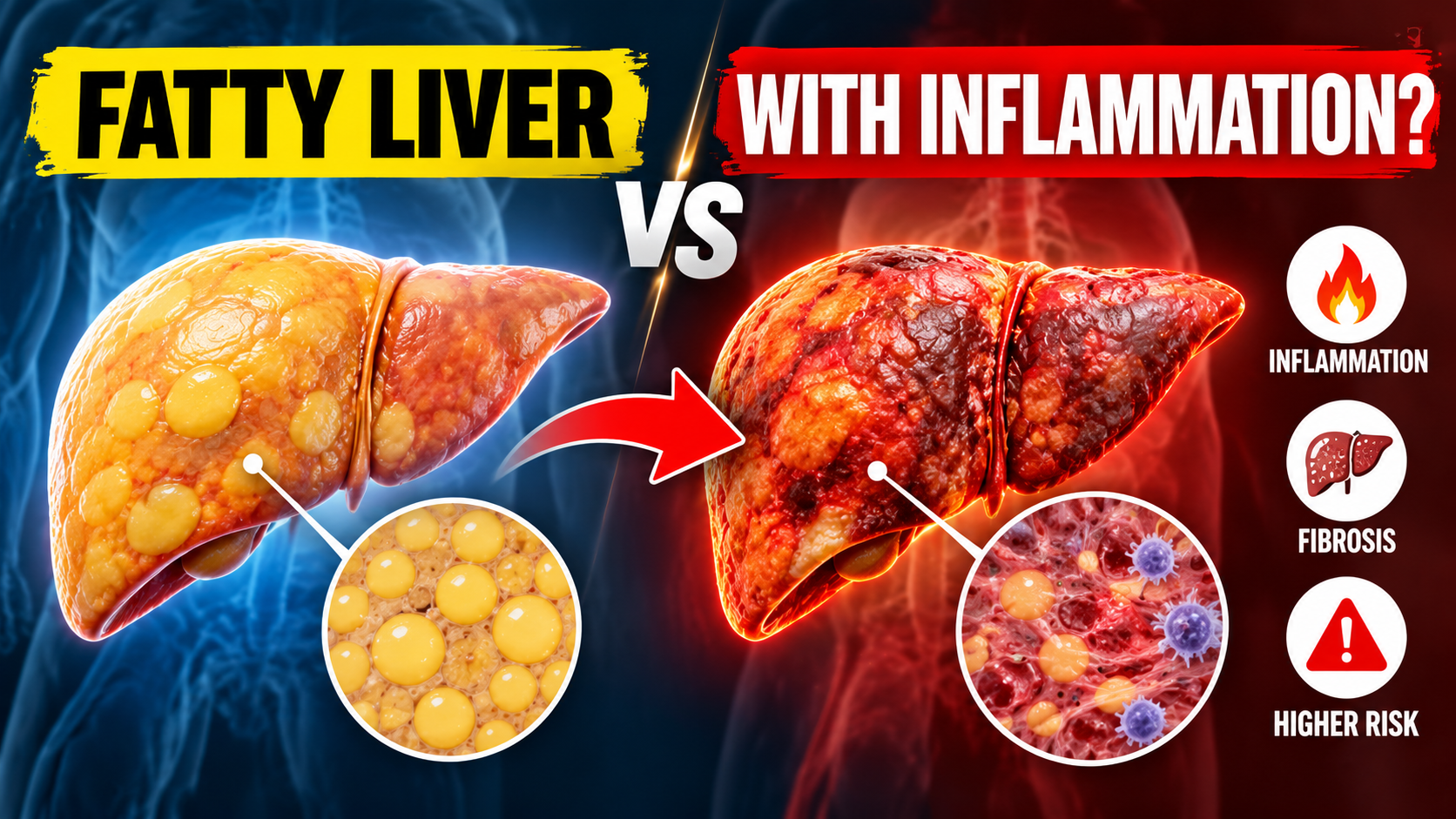
Fatty liver and fatty liver disease with inflammation are related conditions, but they differ in the degree of liver injury. Fatty liver refers to excess fat accumulating inside liver cells, while fatty liver with inflammation involves liver cell injury and an inflammatory response. Inflammation can increase the risk of developing fibrosis, a process in which scar tissue forms in the liver.
Many people with fatty liver have no symptoms and never develop significant liver damage. However, some develop a more progressive form of the condition that can affect long-term liver health. Understanding the distinction between simple fat accumulation and inflammatory liver disease helps explain why Fatty Liver may require different levels of monitoring and medical management depending on the findings.
What Is Fatty Liver Without Inflammation?
Fatty liver occurs when excess fat accumulates in liver cells. When this happens without significant inflammation or liver cell injury, it is often described as simple steatosis.
This condition is commonly associated with metabolic risk factors, including excess body weight, insulin resistance, type 2 diabetes, and elevated triglycerides. Alcohol consumption can also cause fat accumulation in the liver.
Simple fatty liver often does not cause noticeable symptoms. It may be discovered during an abdominal ultrasound or an investigation for abnormal liver blood tests.
Although simple steatosis generally carries a lower risk of progression than inflammatory fatty liver disease, it should not be ignored. Some people may develop inflammation or fibrosis over time, particularly when metabolic risk factors remain uncontrolled.
What Is Fatty Liver Disease With Inflammation?
When excess fat accumulation is accompanied by liver cell injury and inflammation, the condition may be classified as steatohepatitis.
In people with metabolic dysfunction-associated steatotic liver disease (MASLD), the inflammatory form is called metabolic dysfunction-associated steatohepatitis (MASH). It was previously known as non-alcoholic steatohepatitis (NASH).
Can Fatty Liver Progress to Inflammation?
Yes. Fatty liver can progress to an inflammatory condition in some individuals, although this does not happen to everyone.
Insulin resistance, type 2 diabetes, excess abdominal fat, and other metabolic factors can contribute to the processes associated with liver cell injury. Genetic susceptibility and other health conditions may also influence progression.
Persistent liver injury can activate the body's repair mechanisms. When this continues, scar tissue may accumulate and gradually interfere with normal liver structure.
The absence of symptoms does not rule out inflammation or fibrosis. Medical testing is necessary to assess liver health more accurately.
How Do Doctors Diagnose Fatty Liver With Inflammation?
Doctors combine medical history, blood tests, imaging, and fibrosis assessment to evaluate fatty liver and determine whether further investigation is needed.
Liver blood tests: ALT and AST can indicate possible liver cell injury, but normal results do not exclude MASH or significant fibrosis.
Abdominal ultrasound: Ultrasound can identify signs of fat accumulation, but it cannot reliably distinguish simple fatty liver from MASH.
Fibrosis risk assessment: Tools such as the FIB-4 score use routine blood test results and age to estimate the likelihood of advanced fibrosis.
Elastography: This test measures liver stiffness and can help assess the likelihood of significant scarring.
Liver biopsy: In selected cases, a biopsy may be needed to confirm steatohepatitis and evaluate the extent of inflammation and fibrosis. It is not necessary for every patient.
Established cirrhosis is more difficult to reverse than early-stage disease. Treatment decisions should therefore be based on proper assessment rather than symptoms or liver enzyme results alone.
When Should You Consult a Doctor?
Medical evaluation is advisable for people with fatty liver who also have diabetes, obesity, persistently abnormal liver enzymes, or other risk factors for progressive liver disease.
A healthcare professional can determine whether further fibrosis testing or specialist referral is appropriate.
Seek prompt medical attention for jaundice, significant abdominal swelling, unusual bleeding, or confusion. These symptoms may indicate serious liver complications or another condition requiring urgent care.
Conclusion
Fatty liver without significant inflammation primarily involves excess fat accumulation in liver cells, whereas MASH involves fat accumulation alongside liver cell injury and inflammation. MASH carries a greater risk of fibrosis and, in some individuals, progression to cirrhosis. However, neither condition can be reliably distinguished by symptoms alone.
Appropriate testing, management of metabolic risk factors, and regular monitoring can help guide treatment and reduce the risk of progressive liver damage. Patients who need specialist assessment can consult an interventional radiologist Jaipur to discuss whether image-guided procedures are relevant to their specific diagnosis.
Frequently Asked Questions
Is fatty liver the same as MASH?
No. Fatty liver describes fat accumulation in the liver, while MASH involves fat accumulation accompanied by liver cell injury and inflammation.
Can fatty liver exist without inflammation?
Yes. Fat can accumulate in liver cells without significant inflammation or injury. This is commonly described as simple steatosis.
Is fatty liver with inflammation more dangerous?
It carries a greater risk of fibrosis and progressive liver damage than simple steatosis, although the outcome varies between individuals.
Can blood tests distinguish fatty liver from MASH?
Blood tests can identify possible liver injury and help estimate fibrosis risk, but they cannot reliably confirm or exclude MASH on their own. Additional assessment may be needed.
Can MASH progress to cirrhosis?
Yes. In some people, persistent inflammation and liver injury lead to fibrosis that can progress to cirrhosis. Not everyone with MASH develops cirrhosis, and appropriate management can help reduce the risk of progression.
Comments