Travelling through Ethiopia and Djibouti offers more than beautiful landscapes and historic attractions. Both East African countries have rich food traditions, welcoming communities and unique customs. From Ethiopia's famous coffee ceremonies to Djibouti's delicious rice dishes, visitors can discover local cultures through everyday experiences.
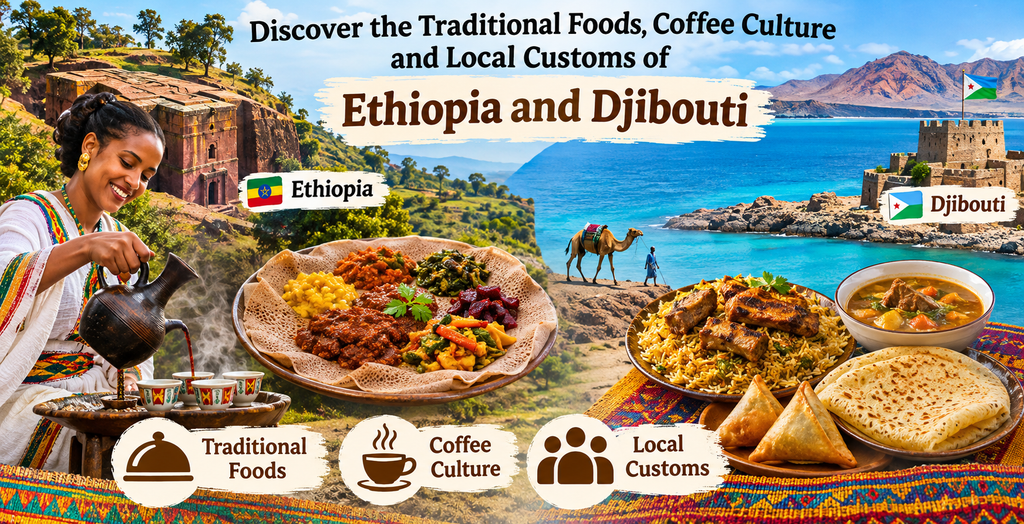
Understanding traditional foods, dining habits and social customs helps travellers enjoy a more meaningful journey.
Traditional Foods You Must Try in Ethiopia
Ethiopian cuisine is famous for its rich flavours, traditional spices and shared meals. One of the most popular foods is injera, a soft, slightly sour flatbread commonly made from teff flour.
Injera is usually served with different stews and vegetables. Popular Ethiopian dishes include:
- Doro Wat: A spicy chicken stew prepared with onions, berbere spices and boiled eggs.
- Shiro: A thick chickpea-based stew served with injera.
- Tibs: Small pieces of beef or lamb cooked with onions, peppers and spices.
- Beyaynetu: A colourful platter containing vegetables, lentils and different plant-based dishes.
Traditional Ethiopian meals are often served on one large plate, allowing families and friends to share food.
Travellers planning to explore Ethiopian restaurants and cultural attractions can review the Ethiopia tourist eVisa application information before their journey.
Ethiopian Coffee Culture: More Than Just a Drink
Ethiopia has a long history connected with coffee. The traditional Ethiopian coffee ceremony is an important part of hospitality and social life.
During the ceremony, coffee beans are roasted, ground and brewed in a clay pot called a jebena. Fresh coffee is poured into small cups and commonly served with popcorn or roasted grains.
The ceremony traditionally includes three rounds:
- Abol: The first and strongest serving.
- Tona: The second serving.
- Baraka: The final serving, associated with blessings.
Guests often spend time talking and enjoying each other's company throughout the ceremony.
Traditional Foods and Local Flavours of Djibouti
Djiboutian cuisine combines Somali, Afar, Yemeni and other regional influences. Rice, meat, seafood, spices and flatbreads are common ingredients.
Some popular traditional dishes include:
- Skoudehkaris: A flavourful rice dish cooked with meat and aromatic spices.
- Fah-fah: A warming meat soup containing vegetables and seasonings.
- Lahoh: A soft, spongy flatbread commonly eaten during breakfast.
- Samboussa: Crispy fried pastries filled with meat or vegetables.
Visitors can explore local markets and traditional restaurants in Djibouti City to experience authentic regional flavours.
Coffee, Tea and Hospitality in Djibouti
Tea is an important part of everyday social life in Djibouti, while coffee is also enjoyed. Visitors may find sweet tea flavoured with spices, particularly in local cafés and homes.
Sharing drinks provides opportunities for conversation and hospitality. Accepting a refreshment when visiting a household is often appreciated.
Local Customs and Dining Etiquette
Respecting local traditions is important when visiting Ethiopia and Djibouti.
In Ethiopia, people commonly eat using their right hand, especially when sharing injera. Washing hands before meals is customary.
In Djibouti, greetings and polite conversation are important parts of social interactions. Visitors should dress respectfully, especially around religious places and traditional communities.
Asking permission before photographing people is another thoughtful practice in both countries.
Planning Your Ethiopia and Djibouti Cultural Trip
Before travelling, visitors should check passport validity, entry requirements and relevant travel documents.
Those visiting Djibouti can explore the online Djibouti eVisa application process to understand the required documents and application steps.
Professional eVisa assistance services may help travellers review application details, upload documents and understand available processing options. However, visa approvals and processing times remain subject to immigration authorities.
Final Thoughts
Ethiopia and Djibouti offer unforgettable cultural experiences through traditional meals, coffee and tea customs, and warm hospitality. Trying local food, visiting markets and respecting community traditions can turn an ordinary holiday into a memorable cultural journey.
Comments